Use cases · August 18, 2026
AI calling for SaaS sales teams: demo requests, trials and no-shows
Demo requests and trial users go quiet quickly. Here is where AI calling fits a SaaS funnel, which calls to automate and which to leave to your AEs.
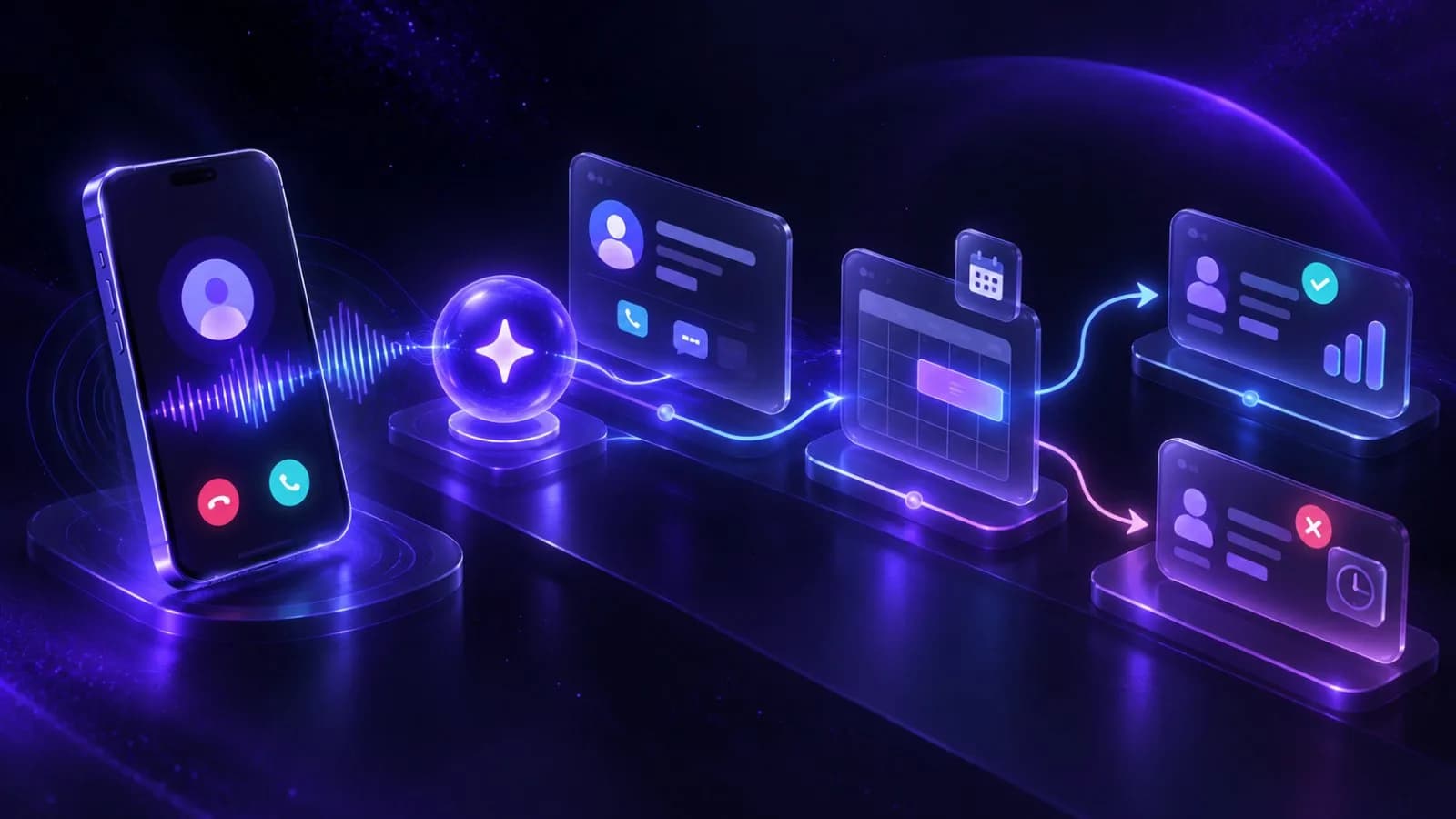
AI calling for SaaS sales works best on warm moments in the funnel: a demo request that arrived two minutes ago, a trial user who has not connected their data, a booked demo that might be forgotten. These are short calls with a clear goal, and they decay quickly if left to a busy team. Used this way, an AI voice agent frees account executives for the conversations that need judgement, and it makes sure nobody who raised their hand gets ignored.
Where SaaS funnels leak
If you look at a typical product-led or demo-led funnel, the drop-offs come from four places:
- Demo requests that wait hours for a reply and book a competitor first.
- Trial sign-ups who log in once and never come back.
- Booked demos with high no-show rates.
- Closed-lost deals that nobody revisits.
Email handles some of this. A phone call does more when the person is a decision maker and the goal is simple, because it is harder to ignore and quicker to resolve. The trouble is capacity. SDRs cannot call every trial user, and most teams do not try.
Four calls worth automating
1. The inbound demo request
A prospect submits the form. Within minutes, an agent calls, introduces itself as an AI assistant calling for your company, and does three things: confirms what they are hoping to solve, asks a few qualifying questions, and books a demo with the right AE.
A short example of the opening:
Agent: Hi, this is an AI assistant calling for Northfield Software. You asked for a demo of our scheduling tool a few minutes ago. Do you have a minute so I can get it booked with the right person?
If the lead says "not now", the agent offers a time to call back or a self-serve booking link by message. This ties directly to speed to lead.
2. The stalled trial
Trial users who miss an activation milestone are a prime use case. Using webhooks and automations on the Pro plan, your product can send an event to Purple Voice and add the contact to a campaign. The agent calls, asks how the trial is going, and listens. Common answers include "I have not had time", "I could not connect my data" and "my boss wanted to see it first". Each suggests a different next step: book a setup call, send a help article, or offer a short demo for the boss.
Do not make these calls feel like a chase. The goal is to be useful, and to flag friction your team can fix. The best insight often comes from the summaries rather than the bookings.
3. The demo reminder and no-show rescue
A reminder call a few hours before a demo is cheap and effective for confirming attendance. If someone no-shows, a follow-up call within the hour, offering to reschedule, rescues more meetings than a second email. Make the agent calm and non-judgemental. People forget.
4. Closed-lost revisit
A quarterly campaign to lost deals asking whether circumstances have changed is the kind of task that never gets done manually. Keep it short, ask one question, and respect "no". See reactivating old leads with AI calls for how to structure the campaign.
Qualification that does not feel like a quiz
Your AEs want context before a demo. The agent can gather:
| Question | Useful for |
|---|---|
| What prompted you to look now? | Understanding urgency and pain |
| How many people would use it? | Sizing and plan fit |
| What do you use today? | Positioning and competitor awareness |
| Who else is involved in the decision? | Multi-threading |
| What does your timeline look like? | Prioritisation |
Do not push for budget in the first call. If it comes up, take it, but leading with price feels like an interrogation. Our article on AI lead qualification calls discusses scoring from transcripts in more detail.
Handing off to an AE
The hand-off is where hybrid models succeed or fail. Two options:
- Live transfer. If the prospect is hot and an AE is available, transfer the call, with a short verbal briefing. See warm transfer from AI to human.
- Booked meeting with summary. The AE sees the AI summary before the demo and opens with "I saw you are using a spreadsheet today and want to cut weekly reporting time", not "so, tell me about your business".
The second option is more common, and it is where the call summary earns its keep. Purple Voice produces an AI summary and transcript for every call, and can pass them to your CRM through webhooks or email on the Pro plan.
Where AI calling is a poor fit for SaaS
- Complex enterprise deals with many stakeholders.
- Security reviews and procurement conversations.
- Strategic accounts where you want a named human from first contact.
- Cold outreach to purchased lists, which carries compliance and reputation risk. Test warm segments first.
The comparison in AI voice agent vs human SDR goes deeper on dividing the work.
Setup notes for a SaaS team
- Write a clear product knowledge base: pricing page facts, integrations, security basics and common objections. Keep claims you can stand behind.
- Give the agent an exit: if the prospect asks something technical, offer a call with a specialist.
- Set calling hours by timezone. A call at 7am local time to a US-based founder from a UK list will not help.
- Review the first twenty transcripts and edit the prompt weekly.
Numbers to watch
Track reached rate, qualified rate, demos booked, demos held and pipeline created from AI-assisted leads compared with leads handled manually. The article on AI calling metrics that matter explains each one.
A week-one plan
Day one, write the prompt and knowledge base, and test on your own phone. Day two, run five internal test calls with colleagues playing a busy VP, a curious student and a competitor fishing for pricing. Day three, switch on inbound demo requests only, with a transfer number for your on-duty AE. Days four and five, read every transcript. At the end of the week, list the five questions the agent handled badly and fix them. Only then add trial follow-up. Resist adding closed-lost campaigns until the first two flows are stable, because each flow adds new kinds of conversation to review.
Try it
Start with inbound demo requests only. The Purple Voice Free plan gives you one agent, one number, 100 contacts per campaign and 100 minutes a month, no card needed, which is enough to test fifty or so demo requests. Try it at voice.purplerocket.co, and check pricing if you need webhooks and the API for trial triggers.
Frequently asked questions
How can SaaS teams use AI calling?
The strongest uses are calling inbound demo requests within minutes, checking in on stalled trial users, reminding people about booked demos, and chasing no-shows. Each is a short call with a clear next step.
Can an AI voice agent replace SDRs at a SaaS company?
It can take over the first-touch and follow-up calls that SDRs find repetitive. Complex discovery, multi-stakeholder deals and relationship building still need people, so most teams use a hybrid model.
What should an AI agent ask a SaaS demo requester?
Confirm what prompted the request, team size, current tool or process, timeline and who else is involved. Then book a demo with the right AE using Google Calendar.
Can AI calling help with free trial conversion?
It can. A friendly call to trial users who have not completed key setup steps, offering help or a walkthrough booking, often surfaces blockers that email does not. Trigger calls from product events through webhooks on the Pro plan.
How do you hand a hot SaaS lead to an AE?
Use a live transfer when the AE is available, or book a meeting with a summary attached. The AE should see the transcript summary before the first conversation so the buyer does not repeat themselves.
Does AI cold calling work for B2B SaaS?
It works best on warm leads, such as demo requests and trial sign-ups. Pure cold outreach to purchased lists is harder and carries more compliance risk, so test warm segments first.
- saas
- demos
- trials
- outbound